About Poole Bay
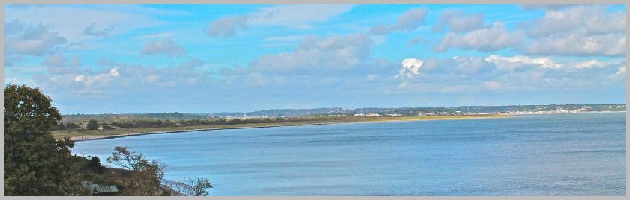
Poole Bay is a bay in the English Channel, on the coast of Dorset in southern England, which stretches 16 km from Sandbanks at the mouth of Poole Harbour in the west, to Hengistbury Head
in the east.
A host of opportunities await Sea Angling visitors to the town of Poole. A number of species can be caught from the shore and boats around Poole during the year.
Anglers from all over the country converge on Poole during May for the fierce fishing black bream. This fish gives a good account of itself whilst drift fishing over marks in Poole Bay
with light gear.
Inshore fishing will see bass, mackerel, tope, gurnard, blonde, thornback, undulates, small-eyed and spotted rays.
Also garfish, dogfish, bull huss, scad, wrasse, plaice, pout, smoothhounds, congers, bream, pollock, etc., throughout June to September.
Some huge plaice come from the harbour with fish of 6lbs 8oz caught during June to August falling to ragworm bait.
Shark fishing is best from the end of July to the beginning of September.
Wrecks hold plenty of Pollock with trips from March until the end of September providing good hauls. Cod, ling and congers will join the dominant Pollock around May
onwards.
Small species included bream of 5 lbs and the odd John Dory can be caught towards September. Turbot, brill and bass will provide good sport for anglers.
Cod will be caught from various marks off Old Harry Rocks during October until January with all fish around double figures.
Big blonde rays and double-figure pollock will also be caught as will congers while anglers bait their big hooks with plenty of squid for that meaty cod.
The end of September throughout most of October sees the arrival of the herring which gives anglers an alternative bait or a tasty meal. Whiting usually turn up at the end of October and
many anglers enjoy catching them right through until the end of January although if you want cod, a big bait and big hook is required.
Poole Harbour
Poole Harbour is a large natural harbour in Dorset, southern England, with the town of Poole on its shores.
The harbour is a drowned valley (ria) formed at the end of the last ice age and is the estuary of several rivers, the largest being the Frome. The harbour has a long history of human
settlement stretching to pre-Roman times.
The harbour is extremely shallow (average depth: 48 cm), with one main dredged channel through the harbour, from the mouth to Holes Bay.
Much of the north side of the harbour is a built-up area, including the town of Poole, and the conurbation which continues 10 miles (16 km) eastwards along the coast.
The west and south sides of the harbour and part of the Purbeck Heritage Coast are important wildlife havens, as are the five large islands in the harbour, which are home to the
endangered red squirrel.
The harbour is an area of international importance for wildlife conservation and borders three National Nature Reserves, including the internationally important Studland and Godlingston
Heath NNR, and a number of local and non-statutory nature reserves run by organisations such as the National Trust and RSPB, notably Arne.
The mouth of the harbour is partially blocked by Sandbanks, a spit on the north, which is built up and part of Poole, and by Studland to the south, which is another important wildlife
area.
Four rivers drain into Poole harbour, the largest being the River Frome, which flows from the west through Dorchester and Wareham.
The harbour is very shallow in places and has extensive mud flat and salt marsh habitats, as well as muddy and sandy shores and seagrass meadows. The area is an extremely popular
recreation and tourism area, and local authorities and organisations have to carefully manage the tourism to prevent damage to the habitats.
The south shore of the harbour, including Wytch Heath and Godlingstone Heath, is open heathland of little agricultural use. During the 20th century there was some afforestation with
conifer plantations. Around Wareham Forest in the west this has been for commercial forestry, but on the southern shore the plantations conceal the Wytch Farm oil wells.
Three bird species occur in internationally important numbers: common shelduck, pied avocet and black-tailed godwit. Other notable visitors include spoonbill, Sandwich tern and whimbrel.
Once rare, little egrets are now seen regularly and in increasing numbers.
Any queries or concerns?
Please call us on +44 7990511326 +44 7990511326 or use our contact form.
 Print
Print 